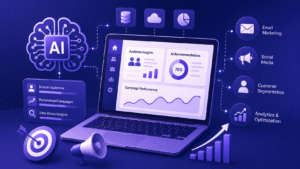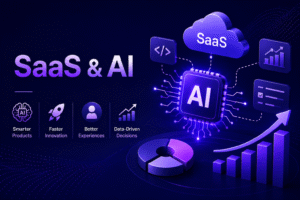
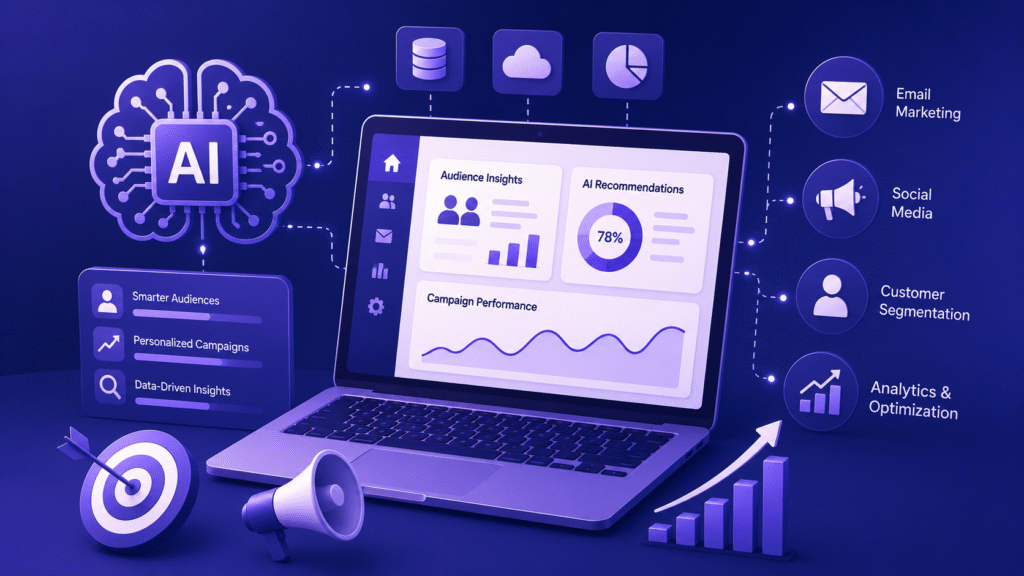

Artificial intelligence (AI) is transforming B2B SaaS marketing by automating repetitive tasks, powering personalization, and unlocking data-driven insights. By leveraging AI, SaaS companies can segment audiences more accurately, craft hyper-relevant content, and optimize ad campaigns at scale.
For example, 69% of consumers welcome personalized content when they consent to data sharing. In fact, as per our State of the SaaS report, personalized AI-driven marketing can boost productivity by 34% and revenue by up to 18%. The key is adopting AI strategically: start small with pilot projects, measure results, and then scale across your marketing stack.

In this article, we’ll explore proven strategies and tools SaaS marketers can use to harness the power of AI in their marketing campaigns. We’ll cover AI for personalization, content creation, email/lead nurturing, advertising, and analytics – plus tips on choosing tools and staying ethical.
Hyper-Personalization and Audience Segmentation with AI
One of the biggest benefits of AI in SaaS marketing is personalization at scale. AI algorithms analyze customer data (demographics, behavior, usage) to segment users and serve tailored messages. According to Gartner, companies using AI for personalization see a 5–15% uplift in revenue while improving customer satisfaction. Best practices include mapping your customer journey to identify which content resonates at each stage, and then using dynamic content blocks or personalized recommendations to address each user’s needs.
Use AI platforms (like HubSpot or Salesforce Einstein) to automate this. For example, Adobe Experience Cloud uses AI to align personalization across channels. The Single Grain team notes that personalization platforms can dynamically adapt your website or app content, for instance, highlighting product features that matter to each visitor. In email marketing, AI tools can craft unique subject lines and body copy for different segments. (HubSpot’s AI Writer and Copilot, Mailchimp’s Creative Assistant, or GetResponse’s GPT-powered email generator are good examples.)
Metrics to track: customer lifetime value (CLV), conversion rates, and engagement. Personalized campaigns often lift conversions by 10–15% and can increase CLV by 10–40%. Monitor these to ensure your AI-driven personalization is working.
Tools: AI content platforms like Optimizely or Adobe Experience Cloud for web personalization, customer data platforms (CDPs) like Segment, and email tools with AI personalization (e.g., HubSpot Marketing Hub, Marketo, or ActiveCampaign). These tools integrate with your CRM/analytics to tailor messaging automatically.
AI Content Creation and SEO Optimization
Producing high-quality content is critical for SaaS marketing, and AI can dramatically speed this up. Generative AI assistants (ChatGPT, Jasper.ai, Copy.ai, Writesonic) can draft blog posts, social media updates, ads, or email copy based on your prompts. For example, Jasper.ai can learn your brand voice from uploaded guidelines, then produce on-brand ad copy or blog drafts. Copy.ai and Notion AI are excellent for brainstorming headlines, outlines, or expanding bullet points into paragraphs.
However, always have humans edit and refine AI-generated copy. Use grammar tools like Grammarly (with its new AI writing assistant) to polish tone and correctness. MarketerHire reports that combining brand-trained AI (like Jasper) with human editing can cut content production time by 6–10×.
For SEO and content optimization, AI tools can suggest keywords, outline topics, and audit existing content. Surfer SEO analyzes top-ranking pages and generates a content plan – it even gives a “Content Score” to help your copy outrank competitors. MarketMuse provides AI-driven content briefs and clusters, helping you map out topic strategies and generate initial drafts. The AI tool Alli AI (for SaaS SEO) will crawl your site and auto-recommend SEO fixes (missing alt text, internal links, etc.) for you to approve.
Best practices: Use AI to ideate and create drafts, but inject human insight to ensure relevance and creativity. Optimize content structure and keywords with AI suggestions, then review before publishing. Track SEO results (rankings, organic traffic) to refine keywords. Remember that AI tools often work best when given clear inputs (e.g., target keywords, tone, brand guidelines).
AI-Powered Lead Generation and Email Nurturing
AI excels at generating and nurturing B2B leads. Lead scoring and segmentation: Marketing automation platforms (HubSpot, Marketo, Pardot) have AI modules to score leads based on behavior. Single Grain highlights that AI can predict which leads are most likely to convert, so sales teams focus on high-value prospects. For example, Encharge’s platform uses AI-driven lead scoring to flag in-market users for follow-up.
AI Chatbots: Implement AI chatbots on your website to qualify visitors instantly. Tools like Drift, Intercom, or LiveChat’s ChatBot use natural language processing to answer questions and gather contact info 24/7. Over time, these chatbots learn from interactions, improving their responses. According to Encharge, AI chatbots can personalize answers and even proactively offer trials or discounts, boosting engagement and speeding up the funnel.
Email campaign automation: AI can optimize nurture email sequences. Tools like HubSpot Breeze, GetResponse, or Mailchimp leverage AI to choose send times, generate content, and tailor messages. For instance, GetResponse’s GPT-powered email generator writes email drafts from your input keywords and goals. Seventh Sense (an AI email scheduling tool) analyzes each contact’s history to schedule sends when they’re most likely to open. AI also helps clean lists by removing unengaged contacts or suggesting re-engagement campaigns.
Best practices: Integrate all lead data into your CRM so AI models have a full picture. Start with one channel (e.g. email) and test AI-powered splits (A/B tests). Use AI recommendations (best time to send, subject lines) but keep your brand voice consistent. Cite HubSpot’s findings: most marketers find AI saves time and improves performance in email campaigns. Track metrics like email open rates, click-throughs, and conversions to adjust strategy.
AI-Driven Advertising and Campaign Optimization
AI can transform your paid ad campaigns on Google, LinkedIn, Facebook, etc. Many ad platforms now include AI bidding and targeting: for example, Google Ads and Facebook Ads use machine learning to find the best audiences and bid prices. Third-party tools like Adext AI or Albert.ai specialize in automating ad optimization (budget allocation, creative testing) across platforms.
MarketerHire notes that AI tools can test thousands of ad variations at scale. For instance, Jacquard generates and tests thousands of subject lines, SMS, or push notifications to find the best performers. Persado uses AI to craft emotionally targeted ad copy; Vanguard’s partnership with Persado yielded a 15% lift in LinkedIn ad conversions by optimizing language. Programmatic advertising platforms also leverage AI to automate ad placements: a case study with Stanley Black & Decker showed AI-led Google Search campaigns cut cost-per-lead by 49% and increased dealer leads by 163%.
Best practices: Use AI to test and learn. Run dynamic creative tests and let the AI allocate more budget to winning ads (tools like Smartly.io do this for large ad spends). Give AI enough data (high volume helps machine learning). Combine AI targeting with human strategy: ensure you feed the AI correct objectives and constraints. Track key ad metrics (CPA, CTR, conversion rate) and have AI tools regularly optimize them.
Social Media and Content Promotion with AI
Social media marketing also benefits from AI. Scheduling and repurposing tools like Buffer (with its new AI Assistant) or Sprout Social’s AI features can auto-generate post ideas, captions, and hashtags tailored to each platform. For example, Buffer’s AI can rewrite a draft post specifically for LinkedIn vs. Twitter or suggest related hashtags on the fly. This saves time and ensures consistency across channels.
AI can also repurpose long-form content into snippets. Tools like Lately.ai and Predis.ai generate dozens of social posts from one article or video. Predis, for instance, will even create graphics and short videos along with captions, tailored to trending styles.
Social listening: Use AI-powered listening tools (e.g., Brandwatch, Sprinklr) to monitor brand mentions and sentiment on social. Single Grain highlights that AI-driven sentiment analysis helps you respond to public feedback and gauge overall brand health. Track sentiment and trending topics to adapt your content in real-time.
Best practices: Leverage AI to amplify and analyze your social efforts. Schedule posts with AI for optimal times. Use A/B tests on social ads (AI can help pick winning images or copy). Continuously refine your social strategy by listening to AI-generated audience insights.
AI Chatbots and Virtual Assistants
In addition to marketing automation, AI chatbots and assistants improve customer engagement and support, indirectly fueling marketing success. Advanced chatbots (built on platforms like ChatGPT or custom ML models) can answer FAQs, onboard new users, and even triage support tickets. According to Encharge, AI chatbots learn from your site content to give precise answers, and can even initiate conversations with offers to boost conversions.
For example, LiveChat’s ChatBot and Kustomer let you build multi-channel conversational flows. Over time, these bots gather data on common user questions, which you can use to refine your product messaging or content.
Best practices: Deploy chatbots thoughtfully – start with simple use cases (e.g., answering pricing questions or scheduling demos) and expand. Always include an option to hand off to a human if the AI can’t handle a query. Use analytics from chatbot interactions to identify new content needs.
Data Analytics and Predictive Insights
AI-powered analytics tools turn your marketing data into actionable insights. Google Analytics 4 (GA4), for instance, uses machine learning to predict churn probability and purchase likelihood. It also alerts you when traffic spikes or drops, and often explains why (e.g., “this campaign’s traffic surged”). This frees marketers from manual report hunting.
Specialized platforms like Improvado aggregate data from CRM, ad servers, email, and more to give a 360° view. Their AI can automatically generate dashboards and even suggest next best actions. HubSpot’s AI (ChatSpot) lets you query marketing data in natural language – e.g., ask it to “show last quarter’s MQLs by segment” and get immediate answers.
Predictive modeling: AI can forecast which leads are likely to churn or convert. Marketerhire notes that AI-infused CRM (like Salesforce Einstein) predicts who will engage next and scores leads accordingly. These predictions help focus campaigns on the most valuable segments.
Best practices: Set clear KPIs (e.g., MQLs, free trial signups, CAC). Use AI analytics to monitor these automatically. Iterate campaigns based on insights – for example, if AI predicts a segment has high churn risk, run a targeted upsell or retention campaign. Ensure data quality (clean, up-to-date data) for reliable AI results.
Best Practices for Implementing AI in SaaS Marketing
Successfully integrating AI isn’t just about picking tools – it’s about how you adopt them. Industry experts recommend a phased, measurable approach. Start with a pilot: pick one use case (like automating email subject lines or chatbot FAQs) and evaluate its impact before rolling out broadly. This minimizes risk and helps you learn and adjust quickly.
Train your team: AI is as much about change management as technology. Provide training so marketers understand AI capabilities and limitations. For example, teach them prompt-writing or how to interpret AI analytics. Communicate the benefits (time saved, better targeting) to get buy-in.
Measure ROI: From day one, define how you’ll measure success. According to Younium, set KPIs for efficiency (hours saved), cost reduction, and revenue lift. For instance, if AI saves your team 10 hours/week on content creation, calculate that time value. If personalization lifts conversion, track the revenue difference. Only continue investing if the gains are clear.
Ensure integration: Your AI tools must fit into your existing stack. Verify API compatibility with your CRM, CMS, and analytics. Avoid standalone, siloed tools that don’t share data. As MarketerHire warns, a shiny new AI platform is useless if it can’t pull from or push to your other systems.
Iterate continually: AI models can degrade over time if not updated. Regularly audit performance – is the AI still giving useful recommendations? Collect feedback and retrain models or prompts as needed. This commitment to continuous improvement ensures AI remains a competitive edge.
Ethical Use and Data Privacy
With great power comes great responsibility. As you use AI to collect and analyze data, remember to respect privacy and build trust. Ensure compliance with GDPR, CCPA, and industry regulations. Clearly disclose your use of AI personalization and give customers control over their data. According to one survey, 76% of consumers wouldn’t buy from companies they don’t trust with their data. Be transparent about data usage and secure it rigorously (use encryption, SSO, etc.).
Prevent bias by auditing AI outputs for fairness. For instance, make sure your AI isn’t excluding certain customer groups from marketing communications. Maintain a human review loop for any automated decision that could significantly impact a customer. Building trust through ethical AI use will pay off: customers rewarded with transparency are more loyal in the long run.
Choosing the Right AI Tools
With so many AI tools on the market, how do you choose? Start by matching tools to your needs and team. Solo or lean startups should favor all-in-one platforms that work “out of the box” (e.g., HubSpot’s AI Assistant or Jasper.ai for writing) because they require minimal setup. Larger teams with technical resources can consider more complex solutions (Salesforce Einstein, Marketo, custom ML models), but only if they address a clear gap.
Pressure-test any vendor: request a trial or sandbox, run a real workflow, and demand concrete ROI evidence. Be wary of “do-it-all” hype; MarketerHire cautions that tools claiming to solve every problem usually underdeliver in some area. Instead, pick a small number of specialized tools for each function (e.g., Jasper for content, Seventh Sense for email timing, SurferSEO for on-page SEO, a chatbot builder for support).
Finally, consider cost vs. benefit. An AI tool that saves 10+ hours/week or significantly raises conversions will pay for itself. If a tool needs months to set up and shows no clear lift, it’s not worth it.
Conclusion
AI offers SaaS marketers a powerful set of tools to scale campaigns, personalize experiences, and squeeze more ROI from every marketing dollar. By following best practices – starting small, measuring results, ensuring good data, and keeping human oversight – you can harness AI to accelerate growth. From AI chatbots to predictive analytics, the right combination of tools and processes will make your marketing smarter and more efficient.
At My SaaS Journey, we help SaaS startups identify and implement the optimal technology solutions. If you’re ready to elevate your marketing with AI-driven strategies, contact us for a free consultation. Let our team guide you to the right AI tools and practices tailored to your B2B SaaS business, so you can focus on what you do best – building a great product.