
AI agents have moved from demos to everyday tools. Instead of answering one question at a time, an agent takes a goal, plans the steps, uses tools such as a browser, files, or connected apps, and works until the task is done or it needs your input. You can hand an agent a research project, a spreadsheet to build, a bug to fix, or a support queue to answer.
The word “agent” now covers different products. Some are general assistants that work across apps. Some are coding agents that edit software. Others are platforms for building agents for sales, service, or operations. Pricing ranges from free plans to per-conversation fees and enterprise contracts.
This guide compares 14 AI agents by use case, access, published pricing, limits, and fit. The list is vendor neutral. Pricing and features change frequently, so confirm current terms on each vendor’s website before buying.
Quick picks: ChatGPT Work or Claude for general work; Gemini Agent for Google users; Manus for standalone autonomous tasks; Perplexity Comet for free browser assistance; Claude Code, OpenAI Codex, GitHub Copilot, or Cursor for coding; Microsoft Copilot Studio for Microsoft 365; Salesforce Agentforce for CRM; Lindy for email and meetings; n8n for self-hostable workflows; and Intercom Fin for customer service.

What Makes a Tool an AI Agent?
A chatbot answers questions. An AI agent acts. It can plan steps, use tools, and change things outside the conversation. Tools sit on a spectrum: answering prompts, acting with approval, or working independently on scheduled or multi-step tasks. More autonomy can save time, but it also requires more trust, access controls, and oversight.

What to Look for in an AI Agent
- Job fit: General work, browsing, coding, business workflows, or customer service.
- Tool access: Which apps, files, browsers, and systems it can use.
- Control: Whether it requests approval before sensitive steps.
- Deployment: Cloud, desktop, browser, or an existing business platform.
- Output quality: Whether it produces useful, editable work.
- Pricing: Subscription, credits, or per action. Check usage limits.
- Security: Admin controls, data retention, SSO, audit logs, and training policies.
- Reliability: How it handles errors and unexpected input.
Best General-Purpose AI Agents
1. ChatGPT Work
ChatGPT Work handles multi-step tasks in ChatGPT. It can plan work, use connected apps and files, browse, and produce documents, spreadsheets, presentations, and web pages. Features include plans you can review, desktop computer use, scheduled tasks, and connections to tools such as email, calendar, and Slack.
Pricing: Included in ChatGPT plans with plan-specific usage allowances. Plus is listed at $20 per month; higher tiers cost more. Limitations: Complex tasks use allowances quickly, and sensitive actions still need review. Best for: Teams already using ChatGPT that want research and connected data turned into finished work.
2. Claude
Claude offers agent features for desktop files, browser tasks, connectors, and research. Claude in Chrome can navigate pages, click, and fill forms, while desktop tasks can work with folders you choose.
Pricing: Pro is $20 monthly or $17 per month billed annually; Max and team plans cost more. Limitations: Usage limits apply across chat, agent tasks, and Claude Code. Browser safeguards are not foolproof, so avoid sensitive financial actions. Best for: Knowledge workers who want help with documents, files, and browser tasks.
3. Gemini Agent
Gemini Agent combines multi-step tasks, Deep Research, Canvas, Google app connections, and live web browsing. It asks for confirmation before some critical actions and allows users to take over.
Pricing: Early access has been listed with Google AI Ultra at $99.99 per month. Limitations: Availability and features may be limited by plan and region, and open-ended web tasks can be uneven. Best for: Heavy Google users already paying for the required plan.
4. Manus
Manus is a standalone agent that works in a cloud environment and can deliver research reports, slide decks, and websites. It uses credits, and reports about its ownership and pricing have changed, so check the current official details.
Pricing: Third-party reviews have reported paid plans starting around $20 per month, but verify current prices. Limitations: Credit-based costs can be difficult to forecast. Best for: Individuals who want finished deliverables with little setup.
5. Perplexity Comet
Comet is an AI browser that can answer questions about a page, summarize content, and help navigate websites. Some delegated or background features may require a paid Perplexity plan.
Pricing: The browser has been offered free. Limitations: Browser agents can encounter prompt injection and may make mistakes on live websites. Best for: People who want to try browser-based AI assistance at no cost.
Best AI Coding Agents
6. Claude Code
Claude Code can inspect a codebase, explain code, edit files, run tests, refactor projects, and help move issues toward pull requests. It works in terminal and editor workflows as well as supported web and desktop experiences.
Pricing: Included in eligible Claude plans or available through API billing. Limitations: Usage is shared with other Claude features on subscription plans, and developers must review changes. Best for: Developers comfortable checking agent-written code.
7. OpenAI Codex
Codex is OpenAI’s coding agent, available through ChatGPT and supported cloud, IDE, command-line, and desktop workflows. Cloud tasks can run in parallel and assist with pull-request review.
Pricing: Included in eligible ChatGPT plans, with usage varying by tier. Limitations: Free and lower tiers have tighter allowances. Best for: Developers and teams already using ChatGPT who want cloud coding tasks.
8. GitHub Copilot
GitHub Copilot offers coding assistance in editors and an agent that can take assigned work, write code, and open a pull request for review.
Pricing: Free and paid plans are available; Pro has been listed at $10 per month. Limitations: Agent work consumes included AI credits, and business pricing may differ. Best for: Teams whose code and review process already live in GitHub.
9. Cursor
Cursor is an AI-focused code editor with agents that can work across a codebase. Higher plans add cloud agents, automations, and code review features.
Pricing: Plans and model allowances vary; verify current prices on Cursor’s pricing page. Limitations: Some third-party models may be billed separately, making total cost less predictable. Best for: Developers who want agent features built into their editor.
Best AI Agent Builders for Business
10. Microsoft Copilot Studio
Copilot Studio lets organizations build agents with low-code tools, connect business data, and publish agents to Microsoft 365, Teams, SharePoint, websites, and other channels.
Pricing: Credit-based and pay-as-you-go options are available; confirm current regional pricing with Microsoft. Limitations: Credit billing needs planning, and the platform is most natural for Microsoft 365 organizations. Best for: Companies building internal or customer-facing agents around Microsoft systems.
11. Salesforce Agentforce
Agentforce builds agents around Salesforce CRM data for service, sales, lead qualification, and employee workflows.
Pricing: Salesforce has offered conversation-based and credit-based pricing, with additional per-user options. Confirm current rates and usage definitions. Limitations: Pricing can be complex and the platform is most useful for Salesforce customers. Best for: Companies that run sales and service on Salesforce.
12. Lindy
Lindy is a no-code assistant for email, calendars, meetings, scheduling, and follow-up. It can draft replies and request approval before sending.
Pricing: A limited free credit offer and paid plans have been listed; check current prices and credit terms. Limitations: Complex tasks use more credits, and active workspace users may affect cost. Best for: Professionals and small teams that want an email and meeting assistant without building workflows.
13. n8n
n8n combines visual workflow automation with AI agent features, app integrations, human approval for tool calls, and MCP support. It can be hosted in the cloud or self-hosted.
Pricing: Cloud plans and a self-hosted Community Edition are available. Confirm current pricing and execution limits. Limitations: It has a learning curve and suits technical teams best. Best for: Teams that want control over workflows and deployment.
14. Best Customer Service AI Agent: Intercom Fin
Intercom Fin answers customer questions using help content and can resolve conversations or hand them to human agents. Intercom says it can work with existing helpdesks, including Salesforce.
Pricing: Intercom has listed Fin at $0.99 per outcome, with helpdesk seats priced separately. Confirm current rates and what counts as an outcome. Limitations: Costs grow with resolved volume and quality depends on your support content. Best for: Support teams that want an AI agent to handle common questions.
How the AI Agents Compare
The table gives a high-level comparison. Prices are indicative, may change, and should be confirmed with each vendor before purchase.
| Agent | Category | Free option | Pricing approach |
|---|---|---|---|
| ChatGPT Work | General work | Limited | Included in eligible ChatGPT plans |
| Claude | General work | Chat only | Subscription tiers |
| Gemini Agent | General work | Plan-dependent | Google AI Ultra early access |
| Manus | General work | Limited credits reported | Credits |
| Perplexity Comet | Browser | Yes | Some features need paid plans |
| Claude Code | Coding | Plan-dependent | Subscription or API |
| OpenAI Codex | Coding | Limited | Included in eligible ChatGPT plans |
| GitHub Copilot | Coding | Limited | Free and paid plans |
| Cursor | Coding | Limited | Tiered subscription and model usage |
| Copilot Studio | Agent builder | No general free plan | Credits or pay-as-you-go |
| Agentforce | Agent builder | No general free plan | Per conversation or credits |
| Lindy | Personal agent | Limited credits | Subscription and credits |
| n8n | Agent builder | Self-hosted edition | Cloud subscription or self-hosting |
| Intercom Fin | Customer service | No general free plan | Per outcome |
How AI Agents Are Priced
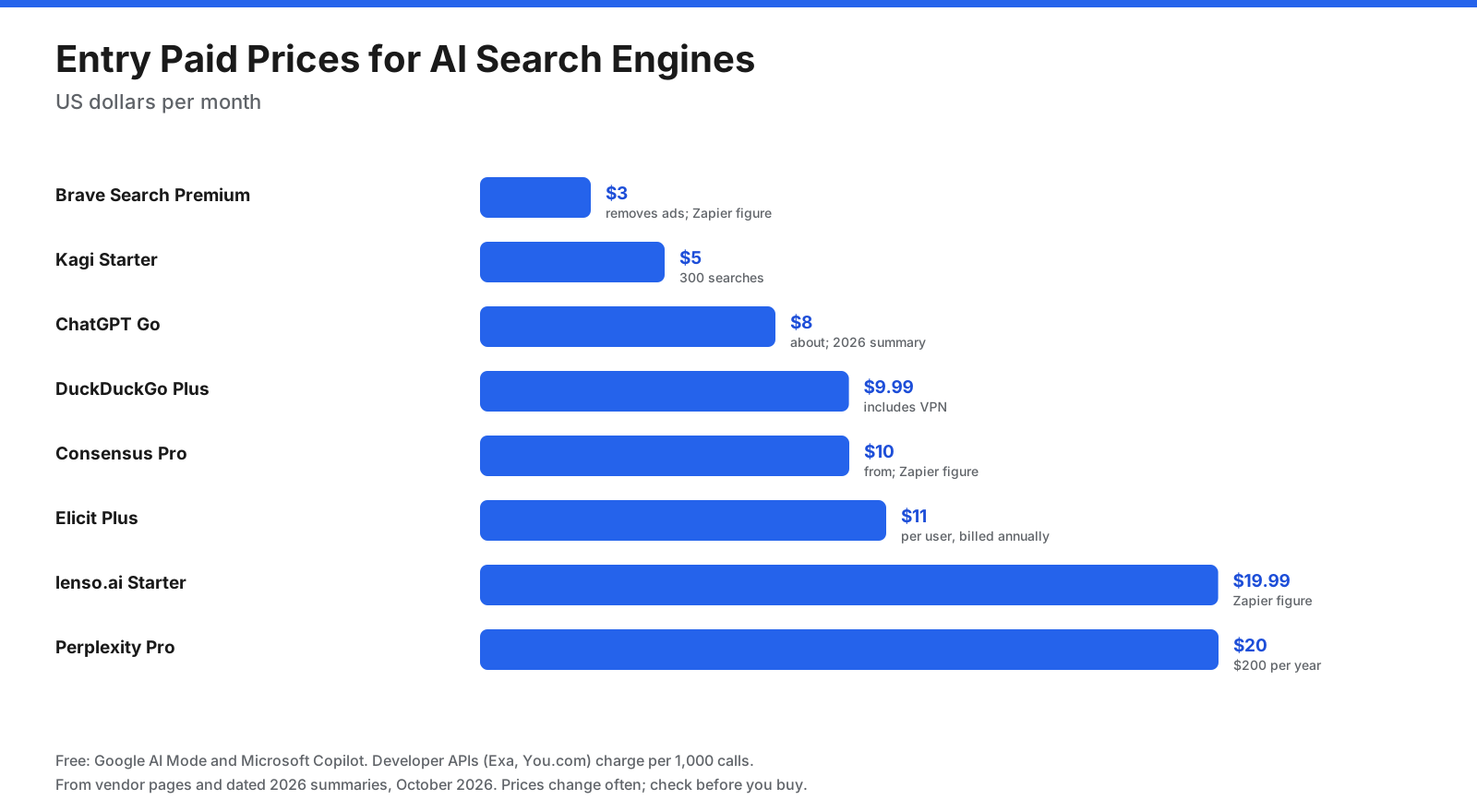
Subscriptions with usage limits. ChatGPT, Claude, GitHub Copilot, and Cursor offer agent features within plans. Costs are easier to budget, but heavy usage can hit limits.
Credits. Manus, Lindy, and some business platforms charge according to consumption. Longer or more complex tasks can use more credits.
Per action or outcome. Salesforce Agentforce and Intercom Fin offer usage-based pricing models. This can connect cost to volume, but estimate expected usage before committing.

Run a pilot with typical tasks and track usage. That tells you more about likely cost than the list price alone.
Risks of Using AI Agents
- Prompt injection: Websites, emails, or documents may contain instructions that try to redirect an agent.
- Wrong actions: Agents can misunderstand a goal and act on the mistake. Keep approvals enabled for consequential actions.
- Data access: An agent with email, file, or CRM access can expose or change sensitive information. Grant only the access it needs.
- Unpredictable costs: Usage-based pricing can rise when tasks take longer than expected.
- Accountability: People remain responsible for messages sent and records changed by an agent.

Start with the lowest permission level that gets the job done.
Which AI Agent Should You Choose?
- General work: Start with the assistant your team already uses, such as ChatGPT Work or Claude.
- Coding: Match the tool to your workflow. Claude Code or Codex suit terminal and cloud tasks, GitHub Copilot fits GitHub-centered teams, and Cursor suits an AI-first editor.
- Business agents: Consider Copilot Studio for Microsoft 365, Agentforce for Salesforce, or n8n for open, self-hosted workflows.
- Personal productivity: Lindy focuses on email and meetings.
- Customer service: Intercom Fin focuses on resolving common support questions.

How to Start Using AI Agents Safely
- Pick one repetitive task. Choose a job with a clear finish line, such as preparing a weekly report or triaging support tickets.
- Choose an agent that fits your tools. Existing integrations can reduce setup work.
- Grant minimum access. Connect only the apps and folders the task needs.
- Keep approval on. Require confirmation for sending messages, deleting data, or spending money.
- Run a pilot. Test for two weeks and track accuracy, errors, and usage costs.
- Review and expand. Add tasks only if the first one works reliably.

Frequently Asked Questions
Which is the best AI agent?
There is no single best choice for every job. ChatGPT Work and Claude suit general work; Claude Code, Codex, GitHub Copilot, and Cursor suit different coding workflows; Copilot Studio and Agentforce build business agents; and Intercom Fin focuses on customer service.
Who are the major AI agent providers?
Major providers include OpenAI, Anthropic, Google, Microsoft, Salesforce, GitHub, Cursor, n8n, Lindy, Manus, Perplexity, and Intercom.
What are the best AI agent platforms?
Copilot Studio suits Microsoft 365 organizations, Agentforce suits Salesforce customers, and n8n suits technical teams that want visual workflows and self-hosting.
Are there free AI agents?
Yes. Perplexity Comet, limited tiers of ChatGPT, GitHub Copilot and Cursor, and the self-hosted n8n Community Edition are options. Free plans often have usage limits.
What is the best AI coding agent?
Claude Code, OpenAI Codex, GitHub Copilot, and Cursor are worth comparing. Try them on representative tasks in your own codebase and review the changes.
Can AI agents replace employees?
Agents can handle defined tasks such as research, drafting, coding, and answering common questions, but people still need to set goals, review work, and take responsibility for outcomes.
Is ChatGPT an AI agent?
ChatGPT includes agent experiences for multi-step tasks, while standard chat primarily responds to prompts. The available capabilities depend on the plan and feature being used.
The Bottom Line
The best AI agent fits the work and systems you already use. Compare tools on your own tasks, keep approvals on for sensitive actions, and track usage during a short pilot. Product features and prices change quickly, so confirm the current terms with vendors before you commit.